
Beyond Heat: What a Propane Tank Can Actually Power in Your Home
By the team at Asheville Oil Company
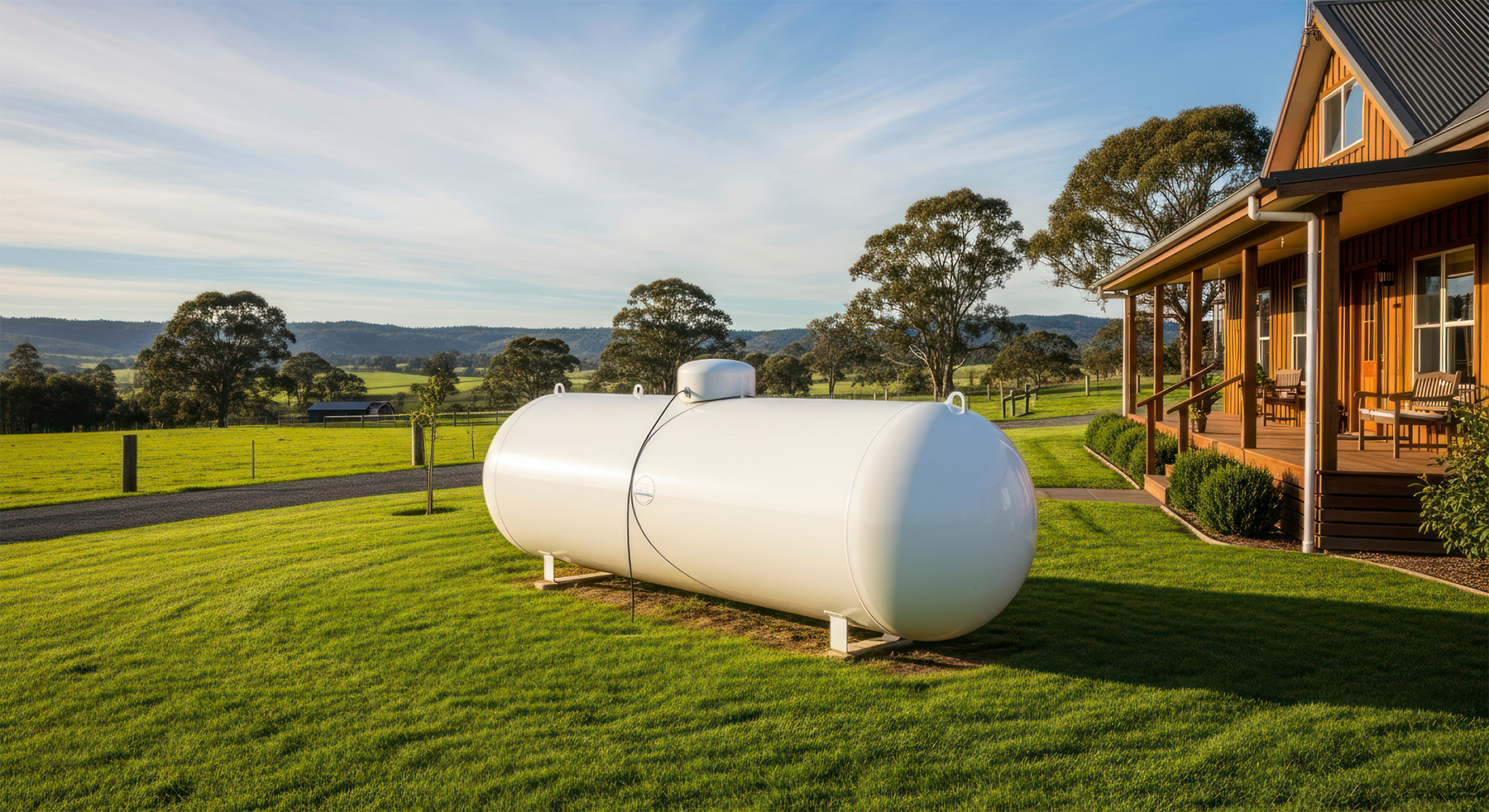
A propane tank at a Western North Carolina home can power far more than a furnace. From the kitchen range to a standby generator, propane serves many points in a home from a single tank and one local supplier. If you have been thinking of propane only as a winter heat source, here is the full picture.
What Can a Propane Tank Actually Power?
The list is longer than most homeowners expect. Here is what a propane tank can serve in a WNC home:
Fireplaces and hearth appliances. A propane fireplace delivers reliable warmth and ambiance without wood-hauling or ash cleanup. Many Asheville-area homes use one as the main comfort zone in the living space.
Kitchen ranges and cooktops. Propane cooking gives you precise flame control and a consistent heat source independent of the power grid. Cooks favor it for the immediate, adjustable response of an open flame.
Clothes dryers. A propane dryer runs hotter and faster than most electric models, which can translate to lower energy use for households that do a heavy laundry load.
Water heaters. A propane water heater can deliver hot water on demand. Tankless propane models have become popular in WNC homes that want efficiency and a consistent supply.
Standby generators. A whole-home propane generator keeps your lights, refrigerator, and critical equipment running when the power goes out, drawing from the same outdoor tank that serves your other appliances.
Backup heat behind a heat pump. Heat pumps are efficient across most of the Western North Carolina heating season, but performance can drop on the coldest nights. A propane backup furnace or burner picks up when temperatures fall below the heat pump's effective range.
Outdoor grilling and outdoor kitchens. In the warmer months, a fixed propane line to a grill or outdoor kitchen eliminates cylinder exchanges and gives you a permanent, clean cooking setup on the deck or patio.
One tank, one supplier, one account. That consolidation simplifies both delivery and billing for homeowners who run multiple propane appliances.
How Does Propane Work as Backup Heat for a Heat Pump?
Many newer WNC homes and renovated older ones use a heat pump as the primary system, with a propane furnace as the backup. This is sometimes called a dual-fuel setup, and it fits the Asheville climate well.
Heat pumps move heat from outdoor air into your home. They are efficient when outdoor temperatures are in the moderate range, which covers most of the Western North Carolina heating season. But when temperatures drop hard, the heat pump's efficiency drops with them, and the system may not keep up on its own.
A propane backup holds that line on the coldest nights. The system switches to the propane furnace when conditions call for it, either automatically or by manual adjustment depending on how it is configured. The result is a heating approach that stays efficient across the mild days and stays warm across the cold ones, without asking either fuel to do a job it is not suited for.
What Tank Sizes Does Asheville Oil Company Offer?
We sell and lease propane tanks in several sizes: 120, 250, 325, 500, and 1,000 gallons. The right size depends on how many appliances you are running, the size of your home, and whether propane is your primary fuel or a backup for one or two uses. Matching the tank to the household is a conversation our team at 22 Tribology Drive has regularly with both new and long-standing customers across Buncombe County and the wider WNC region.
A smaller tank may serve a single appliance, such as a fireplace or a generator that runs only when needed. A larger tank is typically right when propane is the primary fuel for multiple systems year-round.
When we make a delivery, we fill your tank to 80 percent. That is the standard fill level for propane, which leaves room for the gas to expand safely with temperature changes. A good practice is to call or text us when your gauge reads between 20 and 30 percent, so you are not cutting it close heading into a cold stretch. Customers on our Automatic Delivery program do not have to track the gauge; we schedule the delivery before the tank gets low.
You need to either own your tank or lease one from us. We can only fill a tank that belongs to you or is leased through Asheville Oil Company.
Is There a Safety Check I Should Know About?
Propane is odorized with a compound that smells like rotten eggs. That smell is there by design: propane has no natural odor, so the added odorant makes any leak detectable. If you ever smell it near your tank or inside your home, leave the building without turning any switches on or off, and call 911 and then us from a safe distance outside.
For our propane customers, we offer free leak checks. If you are new to propane, or if it has been a while since the system was inspected, that is a no-cost way to confirm everything is connected and working correctly.
Propane is a safe and well-understood fuel when it is handled and maintained properly. Knowing what the safety odor smells like and what to do if you encounter it is simply good information to have. It is calm, factual, and worth a minute of your time.
Why Work With a Locally Owned Propane Supplier?
Asheville Oil Company is the only locally-owned propane company still operating in Asheville. We are a fourth-generation family business that has served Western North Carolina since 1922, and we are based at 22 Tribology Drive, just a few miles from most of the homes we serve in Buncombe County.
When you call or text us, a person here answers. We will tell you honestly which tank size makes sense for your setup and what it will take to get everything connected. We are not a national account system; we are your neighbors in the fuel business.
If you are curious about adding a propane appliance, considering your first tank, or just want to understand your options, call or text us during business hours and we will walk you through it.
Call or Text 828-274-7978
Frequently Asked Questions About Home Propane
Do I have to own the propane tank? You either need to own your tank or lease one from Asheville Oil Company. We cannot fill a tank that belongs to another supplier. If you are starting fresh, we can walk you through the purchase and lease options for each size we carry.
What appliances use the most propane? Whole-home heating and water heating are typically the highest-volume uses. A standby generator also draws a significant amount when it runs, though most generators are not running continuously. Your actual usage depends on which appliances you connect and how often each one operates.
How do I know when to reorder propane? Watch your gauge. We recommend calling or texting when the reading drops to between 20 and 30 percent. Customers on our Automatic Delivery program do not have to track it; we schedule the delivery before the tank gets low.
What is the rotten-egg smell near a propane tank? That odor is added to propane intentionally as a safety measure. Because propane has no natural smell, the odorant makes a leak detectable before it becomes a hazard. If you smell it, leave the building without activating any switches, and call 911 and then us from a safe location outside.
About the Author
This article was written by the team at Asheville Oil Company, a four-generation, family-owned petroleum distributor serving Western North Carolina since 1922 and the authorized ExxonMobil lubricants distributor for the region since 1984. Based at 22 Tribology Drive in Asheville, the company delivers home heating oil, propane, kerosene, gasoline, diesel, lubricants, and DEF to homes and businesses across Buncombe County and the wider WNC region, and remains the only locally-owned propane company still operating in Asheville. Learn more about the team at ashevilleoil.com/about.
